


The proceedings are in progress.
In case of Italian speakers, the video is in Italian language but you can enable subtitles as indicated below (red underline):

School in a changing world
“Our humanity and planet Earth are under threat. (…) We face a dual challenge of making good on the unfulfilled promise to ensure the right to quality education for every child, youth and adult and fully realizing the transformational potential of education as a route for sustainable collective futures.”
 This is the opening sentence of the report published by UNESCO in 2021, “Reimagining our futures together. A new contract for education.” It is a much more alarming opening than that of the well-known reports that preceded it: that of the Faure Commission, entitled “Learning to Be: The World of Education Today and Tomorrow,” from 1972, which proposed lifelong learning as a guiding concept for educational policies, and that of the Delors Commission from 1996, “Learning: The Treasure Within,” (Learning: The Treasure Within), with its four pillars of education—learning to know, to do, to live together, and to be—and the hope for integral human development and the construction of more just, supportive, and peaceful societies.
Today, old and new forces of fragmentation are manifesting themselves in all areas of life: from the proliferation of wars that suggest a piecemeal Third World War, to climate change, from unregulated globalization to growing inequalities and , from the erosion of democracy and international law to the acceleration of technological development and AI that risks ousting human beings, from the “echo chambers” created by social media to the increase in mental suffering that particularly affects young people.
Schools are part of this society and cannot help but be fully affected by these multiple crises, but—despite failing to deliver on the promise of guaranteeing quality education for all and laying the foundations for a sustainable future—they are still recognized as a space where change can be reimagined and built.
Broken promises
 François Dubet, a prominent French sociologist who has spoken at ADi seminars on several occasions, has analyzed in depth this “unfulfilled promise” of education. He argues that the long process of massification of education since the 1960s has only partially fulfilled the three main promises on which it was based: the promise of greater social justice, the promise of developing ‘human capital,’ and the promise of advancing the democratic spirit.
Two types of explanations have been put forward to account for why these promises have been broken: ‘endogenous’ explanations, which blame the school systems themselves for not acting correctly; and ‘exogenous’ explanations, which attribute the difficulties of schools to changes in society that have worked against them. However, neither type of explanation calls into question what Dubet and Duru-Bellat, in their latest work[1] , define as the emprise of the school, its dominance: an emprise linked to the importance of diplomas in individual careers, the monopoly of schools in defining merit, the dichotomy between winners and losers in meritocracy, the impact of schools on work, and finally the ‘colonization’ of education by the ‘form’ that schools take. Without questioning the emprise of the school, the solution that tends to be proposed is to strengthen it: give more school, start earlier, and stay in school longer.
Referring to Ivan Ilyich’s thinking, Dubet puts forward the hypothesis that it is precisely this dominance that transforms the nature of school and weakens education: “In the same way that an excess of industry and mobility destroys nature, or an excess of drugs weakens health , an excess of school emprise kills education”[2] . To lighten the burden of school and its unintended effects, Dubet and Duru-Bellat say that, paradoxically, “more education” is needed: “opening schools to other values and talents and encouraging the diversification of merits to loosen the grip of school”[3] , but also giving up the monopoly of the current school structure, for example, by including skills that are not solely those of academic success in guidance, and opening up training and education to other subjects.
The necessary change
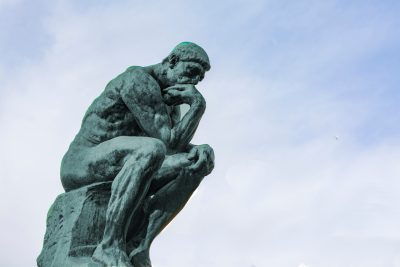 The issues are complex, as always. What is certain is that we cannot move forward by looking backwards, guided by nostalgia for the past, and we cannot simply do more of the same, aiming to perpetuate and strengthen the school system created in the industrial age. We see examples of both these reactions today, both inside and outside schools, in Italy and globally.
History and experience teach us, however, that what the crisis requires is to look ahead, to ‘learn from the emerging future’[4] , as Otto Scharmer proposes with what he has christened ‘Theory U’, a future that needs us to materialize. This requires us to slow down, listen to reality with an ‘open’ mind, possibly placing ourselves on the margins of the system, where information is richer and more often ignored, in order to understand what should be let go, what should be kept, and what should be welcomed and cultivated anew.
This will be the theme of our seminar in February 2026.
The three sessions
As always, the seminar will be divided into three sessions: Friday, February 27, morning; Friday, February 27, afternoon; and Saturday, February 28, morning.
Theoretical reflections, approaches, practices, and stories that show the journey of change will be presented.
First session – In search of a new “grammar” of change
Friday, February 27, morning
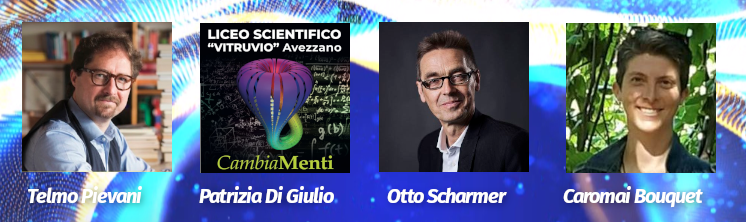
In the first session, coordinated by Giulia Guglielmini, President of the Fondazione per la Scuola, and Giacomo Armigliato, a fourth-year student at Liceo Minghetti in Bologna, we will look at how change happens. Do the mechanisms and strategies of change in nature have something to tell us? What is the path of change in schools, from the initial idea to its full development? How does change take shape in “social fields,” what is the “blind spot” of our movement, and what is the starting point? What does awareness have to do with change?
Telmo Pievani, Professor of Philosophy of Biological Sciences, Bioethics, and Naturalistic Dissemination at the University of Padua, will talk about strategies for change in nature; teachers and students from the Liceo Vitruvio high school in Avezzano will recount their journey of change; Otto Scharmer, senior lecturer at MIT Boston and co-founder of the Presencing Institute, will talk about Theory U, which offers a framework, a method, and a new narrative of change (moved to the afternoon); Caromai Bouquet, mindfulness trainer, will introduce and guide a participatory experience (moved to the afternoon).
Second session – Beyond the myth of irreconcilable alternatives
Friday, February 27, afternoon

The second session, coordinated by Francesco Manfredi, President of INDIRE, and Silvia Collacciani, a first-year student of Aerospace Engineering at the Polytechnic University of Turin, will propose approaches to change that bring together often conflicting needs as alternatives. How can external assessment data be reconciled with creativity and autonomy in teaching? How can attitudes, enthusiasm, and professional development of teachers be aligned? How has Italy changed over the last 60 years, how have young people changed, and what can schools focus on today? Under what conditions can a difference be made in difficult schools?
Wendy Kopp, founder of Teach for America and CEO of Teach for ALL, will talk about the journey that led her from observing the choices made by students at the best American colleges to founding Teach For America and then Teach For All (moved to the morning). Alessandro Rosina, Professor of Demography and Social Statistics at the Catholic University of Milan and scientific coordinator of the Youth Observatory of the G. Toniolo Institute, will talk about the social, economic, and anthropological changes in Italy from the 1960s to today and what young people of Gen Z and the Alpha generation are asking for today; The voices of some primary and secondary school students will help us see things from their point of view; Kathryn Parker Boudett, senior lecturer at the Harvard Graduate School of Education, will talk about her twenty years of work on using assessment data as a starting point for collaboration and improvement; Arnoldo Mosca Mondadori, President of the Casa dello Spirito e delle Arti Foundation, will present the Metamorfosi project, featuring the instruments of the Orchestra del Mare built from the wood of migrant boats by inmates of the Milan Opera, Monza, and Naples Secondigliano prisons (moved to the morning).
Third session – Trends and possible futures
Saturday, February 28, morning

The third session, coordinated by Mimma Siniscalco, President of ADi, and Lorenzo Facchini, a second–year Physics student at the University of Bologna, will analyze system level change, outlining trends and possible scenarios based on international data and perspectives.
Andreas Schleicher, Director of Education and Skills at the OECD, will talk to us about future scenarios for school systems and, in this context, teachers’ expectations; Hai Siang Chia, Senior Specialist at the Singapore Ministry of Education, will outline the transformations and adaptations being implemented by one of the school systems at the top of the PISA rankings in the face of the disruptive arrival of Artificial Intelligence. Ron Berger, teacher, carpenter, author, and senior advisor at EL Education, will talk about how great teachers are not born but made, and about the ethics of excellence.
.
[1] François Dubet and Marie Duru-Bellat, L’emprise scolaire. Quand trop d’école tue l’éducation (The Influence of School: When Too Much School Kills Education), 2024, Presses
De Sciences Po,
[2] Dubet and Duru-Bellat, op. cit. p. 17.
[3] Ibid., p. 199.
[4] Otto Scharmer, Theory U. The Fundamentals, 2018, Guerini Next, p. 30.
PROGRAMME INTERNATIONAL SEMINAR 27-28 February 2026
| 1st SESSION – IN SEARCH OF A NEW ‘GRAMMAR’ OF CHANGE – 27 FEBRUARY 2026 morning | |
| 8:30 | Registration of participants |
| 9:00 | Opening remarks – Mimma Siniscalco, President of ADi |
| 9:10 | Introduction and coordination of the session – Giulia Guglielmini, President of Fondazione per la Scuola, Giacomo Armigliato, fourth-year student at Liceo Minghetti in Bologna. |
| 9:20 | Change in nature – Telmo Pievani, Professor of Filosofia delle scienze biologiche, Bioetica e Divulgazione naturalistica (Philosophy of Biological Sciences, Bioethics and Naturalistic Dissemination) at the University of Padua |
| 10:10 | Discussion |
| 10:25 | From the introduction of CLIL to ‘CambiaMenti’ and beyond, Week of the Scientific Culture – Patrizia Di Giulio, Science teacher, Liceo Vitruvio High School, Avezzano |
| 10:50 | Discussion |
| 11:00 | Coffee break |
| 11:20 | Teach For All: from idea to global organisation – Wendy Kopp, Founder of Teach For America, CEO of Teach For All |
| 11:45 | Discussion |
| 12:00 | Metamorphosis: the story of a wood chant – Arnoldo Mosca Mondadori, President of the Casa dello Spirito e delle Arti Foundation – Musical interlude with instruments from the Orchestra del Mare |
| 13:00 | Conclusion of the session |
| 2nd SESSION – BEYOND THE MYTH OF IRRECONCILABLE ALTERNATIVES – 27 FEBRUARY 2026 afternoon | |
| 14:30 | Introduction and coordination of the session – Francesco Manfredi, President of INDIRE, and Silvia Collacciani, student of Aerospace Engineering at the Polytechnic University of Turin |
| 14:45 | The disappearance of young people – Alessandro Rosina, Professor of Demography and Social Statistics at the Catholic University of Milan and scientific coordinator of the Youth Observatory of the G. Toniolo Institute |
| 15:20 | Discussion |
| 15:35 | Data Wise: Educators collaborating so each learner thrives – Kathryn Parker Boudett, Senior lecturer alla Harvard Graduate School for Education |
| 16:10 | Discussion |
| 16:25 | Coffee break |
| 16:50 | Theory U. For a consciouness-based change leadership – Otto Scharmer, Senior lecturer at MIT Boston, and co-founder of the Presencing Institute |
| 17:20 | Discussion |
| 17:35 | Awareness as the basis for change – Caromai Bouquet, mindfulness trainer |
| 18:30 | Conclusion of the session |
| 3rd SESSION – TRENDS AND POSSIBLE FUTURES – 28 FEBRUARY 2026 morning | |
| 8:45 | Introduction and coordination of the session – Mimma Siniscalco, President of INVALSI, and Lorenzo Facchini, Physics student at the University of Bologna |
| 9:00 | Future scenarios and trends for change at the system level – Andreas Schleicher, Director of Education and Skills at the OECD |
| 9:35 | Discussion |
| 09:50 | Singapore: schools and AI between adaptation and transformation – Hai Siang Chia, Master Specialist in Edtech at the Singapore Ministry of Education |
| 10:25 | Discussion |
| 10:40 | Coffee break |
| 11:00 | For an ethic of excellence – Ron Berger, teacher and educator (Massachusetts), Senior Consultant at Expeditionary Learning Education USA |
| 11:40 | Discussion |
| 11:55 | Interactive moment – Caromai Bouquet, Mindfulness Trainer |
| 12:25 | Conclusion of the seminar – Mimma Siniscalco, President of ADi |
| 12:40 | After the meeting, mini-interviews to speakers and participants wishing to give a feedback in real time |
SPEAKERS 1st SESSION
Telmo Pievani
 Telmo Pievani, evolutionary biologist, philosopher of science, and essayist, is Full Professor of Philosophy of the Biological Sciences at the Department of Biology of the University of Padua. From 2017 to 2019 he served as President of the Italian Society of Evolutionary Biology, the first philosopher of science to hold this position. Since 2024 he has been a visiting scientist at the American Museum of Natural History in New York.
A philosopher of biology and expert in evolutionary theory, he is the author of 375 national and international publications in the field of philosophy of science, translated into many languages. His most recent books are Imperfezione (Cortina, 2019), Finitudine (Cortina, 2020), Serendipità (Cortina, 2021), La natura è più grande di noi (Solferino, 2022), and Tutti i mondi possibili (Cortina, 2024). He is a member of major scientific societies and of the editorial boards of international journals. He directs the online platforms Lucy sui Mondi, Pikaia, and Il Bo LIVE.
Winner of 17 awards, he is also the author of books on evolution for children. Together with Banda Osiris, the collective Deproducers, Gianni Maroccolo, and Marco Paolini, he has created theatrical and musical projects with scientific themes. He collaborates with Il Corriere della Sera and with the magazines Le Scienze, Micromega, and L’Indice dei Libri. In February 2024, the International Astronomical Union dedicated an asteroid to him, 120098 EJ50 2003.
Patrizia Di Giulio, Anna Maria Rubeo, Giuseppina Ruggeri, Rita Sorge, Domenica Ranalli, Tiziana Scenna, Silvia Collacciani
 Since 2004, every March, the Vitruvio Upper Secondary School of Avezzano has organised the project known as the Week of Scientific and Technological Culture, a scientific and experiential programme centred on integrated laboratory activities, intended as a place where ideas, projects, and solutions can “generate”, with students as key players supported by their teachers. The result weaves a rich interplay between science and art, science and literature, science and play, science and sport, creating moments of cognitive, socio-emotional, and psychodynamic development, as well as scientific engagement through lecture-performances and productive, motivating interactions.
The work takes shape and becomes visible to the wider community when the school opens its doors to the local area, presenting exhibitions, displays, experiments, performances, and science-based games created and run by the students. The presence of researchers, scientists, and professionals enriches the event with valuable contributions aimed at highlighting practical and theoretical solutions to modern scientific challenges. The event, now well established and widely recognised, is this year celebrating its twenty-second edition under the title “Complexity”.
Patrizia Di Giulio teaches Science at the Vitruvio Pollione Upper Secondary School in Avezzano and is the long-standing coordinator of the Science Week. She has organised and led school labs in the field of scientific outreach together with the colleagues who work alongside her: Anna Maria Rubeo, Science; Giuseppina Ruggeri, Rita Sorge, and Domenica Ranalli, Mathematics and Physics; and Tiziana Scenna, English.
Wendy Kopp
 Wendy Kopp is CEO and Co-founder of Teach For All, a global network of independent organizations in more than 60 countries that are working to develop collective leadership to ensure that all children can fulfill their potential. After founding Teach For America, which she led for 24 years, she led the development of Teach For All to be responsive to the initiative of social entrepreneurs around the world who were determined to adapt this approach in their own countries.
Wendy is the author of A Chance to Make History: What Works and What Doesn’t in Providing an Excellent Education for All (2011) and One Day, All Children: The Unlikely Triumph of Teach For America and What I Learned Along the Way (2000). She holds honorary doctorate degrees from 15 universities and is the recipient of numerous awards including Forbes 50 Over 50 (2025), the WISE Prize for Education (2021), the Skoll Award for Social Entrepreneurship (2008), and the Schwab Foundation’s Outstanding Social Entrepreneur Award (2003).
Arnoldo Mosca Mondadori
 Arnoldo Mosca Mondadori is the son of Paolo Mosca and Nicoletta Mondadori and therefore the great-grandson of Arnoldo Mondadori, founder of the publishing house of the same name. A publisher, essayist, and poet, he was the editor of the mystical works of poet Alda Merini between 1998 and 2009, published by Frassinelli. He is secretary general of the Benedetta D’Intino Foundation. He is a member of the Board of Directors of the Arnoldo and Alberto Mondadori Foundation. He is President of the Casa dello Spirito e delle Arti Foundation. He is a member of the board of directors of Opera Cardinal Ferrari and Casa Editrice Morcelliana. He was also a member of the Board of Directors of the Cariplo Foundation. From 2010 to 2013, he was President of the Giuseppe Verdi Conservatory in Milan.
His books include: La Seconda Intelligenza (The Second Intelligence) and La lenta agonia della Beatitudine (The Slow Agony of Bliss). Together with A. Cacciatore and S. Triulzi, he edited the volume Bibbia e Corano a Lampedusa (The Bible and the Koran in Lampedusa), La Scuola, Brescia 2014.
SPEAKERS 2nd SESSION
Alessandro Rosina
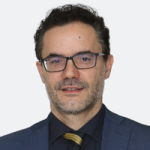 Alessandro Rosina is Full Professor of Demography and Social Statistics at the Catholic University of Milan, where he previously served as Director of the Department of Statistical Sciences and currently directs the Center for Applied Statistics in Business and Economics.
He served as expert to the Minister for Equal Opportunities and the Family from 2019 to 2022, coordinator of the Expert Group on Demography and Covid-19 from 2020 to 2022, member of the COVIGE Committee for the Evaluation of the Generational Impact of Public Policies at the Ministry for Youth Policies from 2021 to 2022, and member of the Working Group on Youth Policies, Work and Welfare at the Ministry of Labour in 2021.
He currently serves as Expert Advisor to the CNEL by appointment of the President of the Republic, scientific coordinator of the Rapporto Giovani of the Toniolo Institute, carried out in collaboration with Fondazione Cariplo and Intesa Sanpaolo, and expert for the Parliamentary Commission of Inquiry on the economic and social effects arising from demographic transition. He is also a member of the Technical and Scientific Committee of IPRASE, Autonomous Province of Trento, and part of the Team of Thematic Experts for the European Commission. He is among the founders of the online journal Neodemos, co-coordinator of the Alleanza per l’Infanzia, Associate Research Fellow at ISPI, member of the Scientific Committee on Intergenerational Impact Assessment established by Save the Children and ASVIS, and an advocate for HeForShe at UN Women Italy.
He has authored numerous scientific and popular publications on demography and development, family models, social innovation and welfare, the transition to adulthood, ageing, and intergenerational relations. He is a columnist for Il Sole 24 Ore. In 2022 he won the Atlante Award of the Fondazione Circolo dei Lettori for the best literary work on demography and sustainable development. His most recent book is The Disappearance of the Young. Ten Maps Explaining Italy’s Demographic Decline, published by Chiarelettere.
Kathryn Parker Boudett
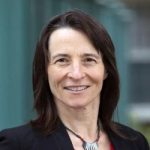 Kathryn Parker Boudett, Ph.D., is a senior lecturer on education and executive director of the Data Wise Project at the Harvard Graduate School of Education. Her passion lies in supporting educators in working together to improve learning and teaching so that each student thrives. She leads institutes, online courses, and a coach certification program on using collaborative data inquiry to build equitable schools. Boudett is co-editor of Data Wise: Educators Collaborating so Each Learner Thrives (2005, 2013, 2025); System Wise: Continuous Instructional Improvement at Scale, (2024), and Meeting Wise: Making the Most of Collaborative Time for Educators (2014), all published by Harvard Education Press. She holds a Ph.D. in Public Policy from Harvard University and a B.A. in Economics from Yale University.
Otto Scharmer
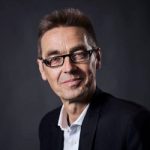 Dr. C. Otto Scharmer is a Senior Lecturer at MIT Sloan School and the Founding Chair of the Presencing Institute, where for over 20 years he has championed cross-sector systems transformation. His groundbreaking work on “presencing”—the practice of learning from the emerging future—has redefined leadership thinking, a vision first shared in his bestselling books Theory U and Presence (co-authored with Peter Senge and others) and later expanded in Leading from the Emerging Future.
Otto’s initiatives have catalyzed global change, notably through the MITx u-lab, which mobilizes a vibrant community of over 260,000 participants from 194 countries. In collaboration with international organizations, he has co-created Action Learning Labs for UN agencies and SDG Leadership Labs for UN Country Teams, driving innovative solutions to urgent humanitarian challenges.
Central to Otto’s philosophy is the idea that sustainable change begins by nurturing the “social soil”—the foundational conditions that enable a regenerative society. This insight, drawn from his early experiences growing up on his family farm near Hamburg, Germany, serves as a powerful metaphor in his work. Just as fertile soil nurtures healthy crops, cultivating a rich social field is essential for fostering transformative leadership and resilient communities.
An alumnus of Witten/Herdecke University with a diploma and PhD in economics, Otto has been recognized with honors including the Jamieson Prize for Teaching Excellence at MIT, the European Leonardo Corporate Learning Award, and the Elevating Humanity Award from the Organizational Development Network. As a member of the Club of Rome, the UN Learning Advisory Council for the 2030 Agenda, and a Councilor of the World Future Council since 2019, Otto is now seeking re-election to continue his vital work in shaping a regenerative future for society.
Caromai Bouquet
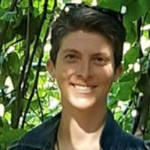 Caromai Bouquet is a mindfulness and meditation practitioner. She spent 18 years as a nun in various international Plum Village practice centers. During these years, she offered retreats and training to people from different fields, including educators, healthcare professionals, environmentalists, and social activists across the Americas, Asia, and Europe. She also worked extensively with children and adolescents and has a strong interest in promoting inclusivity, with particular attention to racial inclusion and the LGBTIQ+ community.
She currently leads mindfulness seminars and training in schools for teachers and in clinical, therapeutic, and corporate settings. She collaborates with the Eurasia Learning Institute and the Happy School Program to share mindfulness practice with teachers and is part of the facilitator team for the Happy School International online training. She also teaches mindfulness in Vietnam to senior leaders of large Vietnamese companies. She regularly organizes retreats in France and Switzerland.
SPEAKERS 3rd SESSION
Andreas Schleicher
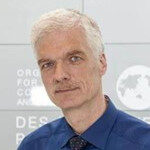 Andreas Schleicher is Director for Education and Skills, and Special Advisor on Education Policy to the Secretary-General at the Organisation for Economic Co-operation and Development (OECD) in Paris. He initiated and oversees the Programme for International Student Assessment (PISA) and other international projects that have created a global platform for policy-makers, researchers and educators across nations and cultures to innovate and transform educational policies and practices. He has worked for over 20 years with ministers and education leaders around the world to improve quality and equity in education. Before joining the OECD, he was Director for Analysis at the International Association for Educational Achievement (IEA). He is the recipient of numerous honours and awards, including the “Theodor Heuss” prize, awarded in the name of the first president of the Federal Republic of Germany for “exemplary democratic engagement”. He holds an honorary Professorship at the University of Heidelberg.
Hai Siang Chia
 Mr Chia Hai Siang has been involved in public education and public service in Singapore over the last 25 years. Beginning as a teacher of English Literature and General Paper in Raffles Junior College, Mr Chia has served subsequent stints in Planning Division, Ministry of Education, as a Subject Head in East Spring Secondary, Vice Principal (Instructional Programmes) at NorthLight School, and finally as Principal, Shuqun Secondary.
From 2016-2018, he was the Principal Analyst for Technology in the Strategic Group at the Prime Minister’s Office, Singapore. From 2018-2025, he was Product Owner for Singapore’s Student Learning Space and its AI in Education solutions, used by half a million K-12 students and teacher across all Singapore schools. Currently, he is a Principal Specialist in Technologies for Learning, Education Technology Division, MOE, and advises the X-Labs, a team of MOE specialists focused on rapid education technology research.
He holds an Honours Degree (Second Upper) in English Literature from the National University of Singapore, a Postgraduate Diploma in Education (Pass with Merit) from the National Institute of Education and a Masters in Education (Learning and Teaching) from Harvard Graduate School of Education.
Ron Berger
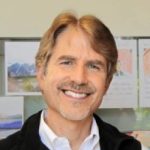 Ron Berger is a well-known national and international keynote speaker focused on inspiring a commitment to quality, character, and citizenship in students. He is the Senior Advisor at EL Education, a nonprofit school improvement organization that partners with public schools and districts across America, leads professional learning, and creates open educational resources. His recent work includes presentations and workshops in England, Scotland, Australia, Japan, Spain, Pakistan, and Timor Leste.
Ron is the author of best-selling education books, including: An Ethic of Excellence, A Culture of Quality, Leaders of Their Own Learning, Transformational Literacy, Management in the Active Classroom, Learning that Lasts, and We Are Crew: A Teamwork Approach to School Culture. He was a professor at Harvard Graduate School of Education, where he did his graduate work. He founded and directs the website Models of Excellence: The Center for High-Quality Student Work, which holds the world’s largest collection of beautiful K-12 student work.
Ron was a public school teacher and master carpenter in rural Massachusetts for over 25 years and received the Autodesk Foundation National Teacher of the Year award.
ASTRACTS 1st SESSION
Telmo Pievani – Change in nature
In evolution, the fuel for every change is diversity. Not the diversity of species, populations or groups, but the radical and irreducible diversity of every single living being. No two plants, animals or human beings are ever the same. This spontaneous force of diversity then encounters environmental and selective dynamics, which we must not associate with the stereotype of “survival of the fittest”. Successful strategies in evolutionary change are always multiple and ambivalent, conflicting and cooperative. Certainly, we would not be here today if we were not a species with a marked capacity for cooperation and altruism. War is by no means written in our DNA. Thanks to our imagination, we can expand the “us” towards whom we feel solidarity. Today, however, the human species suffers from short-sightedness: it disrupts the world around it and then struggles to adapt to a world it has changed and impoverished. Change in nature never produces perfect and definitive results. On the contrary, imperfection is the true mark of history. And the most fruitful imperfection of all has been neoteny, our remaining children longer than any other mammal, our being born as helpless cubs but capable of learning, imitating, playing and experimenting with innovations that no adult had ever thought of. Teaching and learning, this is what has made us human. We are baby monkeys who have transformed fragility into a force for change.
Patrizia Di Giulio, Liceo Vitruvio Avezzano – From the introduction of CLIL to ‘CambiaMenti’ and beyond, XXII Week of the Scientific Culture
Every year, the Liceo Vitruvio Pollione in Avezzano welcomes a large and highly diverse student population (approximately 1,300–1,400 students) from various municipalities in the Marsica area and from different socio-cultural backgrounds. This complexity represents a significant educational resource, but it also challenges the school to ensure inclusion, motivation and equal educational opportunities, not only in terms of academic learning, but also in terms of socio-emotional development and the development of trabsferable skills or soft skills.
Starting in the 2003/2004 school year, a group of teachers chose to “listen to the present” of their school community, questioning some of the assumptions of traditional teaching and experimenting with more participatory teaching methods, without compromising on the rigour of the content and the clarity of the educational objectives. This process also included the introduction of the CLIL methodology, and this shared reflection gave rise to Science and Technology Week, a laboratory-based teaching project that, over the course of more than twenty years, has gradually consolidated itself, now reaching its 22nd edition.
Since 2011, thanks in part to European projects and class exchanges, Science Week has opened up to an international dimension, creating a network of partnerships with foreign schools that actively participate with their own workshops, enriching the methodological and cultural exchange.
During this experience, the school reorganises its time, space and roles, transforming itself into a true educational community: teachers, students, managers, administrative staff and ATA collaborate in the design and implementation of activities, redefining educational relationships and the languages of learning. The presentation offers a reflection on this experience as an example of an approach to change that can influence students’ motivation and their approach to study, offering transferable ideas for rethinking the school as a future-oriented learning environment.
Wendy Kopp – Teach For All: from idea to global organisation
Teach for America was born from observing how and by whom the best graduates from the best American universities were being recruited. This gave rise to the idea of targeting them specifically and asking them to commit to two years of teaching in schools in disadvantaged communities. The idea came at the right time in the United States and received support. The aim was to select people with leadership skills and train and support them during the two years through an intensive in-service mentoring program. But it also followed up with those who wanted to continue working in education after the two years were over, aiming to create collective leadership capacity. In this way, it was able to have an impact on the entire school ecosystem, which in turn had an impact on the academic and other outcomes of students, schools, and entire communities. The experience of Teach for America over more than thirty years, and now the experience of Teach for All, with its various national organizations- including Tach for Italy – show the potential of this initiative, which continues to develop and spread.
Arnoldo Mosca Mondadori – Metamorphosis: the story of a wood chant
From the chronicle of migrant shipwrecks, witnessed by the wreckage of boats collected in Lampedusa, to the music of instruments born from the sea. The journey of those who allow themselves to be challenged by reality and are capable of initiating processes of metamorphosis, transforming wood into song while at the same time reshaping the trajectories of lives.
ASTRACTS 2nd SESSION
Alessandro Rosina – The disappearance of young people
The demographic situation in developed countries, and in Italy in particular, is currently characterized by a marked decline in the number of young people (ageing population), as a result of persistently low fertility rates. The decrease in the number of students should not be interpreted as an opportunity to cut resources and investments, but as a condition that makes it even more urgent to significantly improve the quality of education, starting with schools.
At the same time, there is a clear anthropological change taking place in the generations born in the 21st century, which is associated with the demand for a school that is not only a place for the transmission of knowledge, but also a context in which to feel good and a space capable of giving meaning to learning, accompanying the construction of life plans and providing tools to face a future marked by uncertainty and rapid change.
The main expectations concern the connection between knowledge and real life, the adoption of active and interdisciplinary teaching methods, the quality of educational relationships and attention to psychological well-being. In this perspective, school is also recognised as a fundamental safeguard for reducing social and territorial inequalities, as well as a privileged place for integration, encounter and comparison between cultural, social and gender differences. Overall, there is a demand for education that can enhance the potential of the younger generation, strengthen confidence in the future and contribute to social cohesion. These expectations highlight the need for a strategic repositioning of schools, so that they can strengthen and update their role as key players in the education of competent, responsible citizens who are capable of planning for the future in a society undergoing profound change.
Kathryn Parker Boudett – Data Wise: Educators collaborating so each learner thrives
Imagine a world where each learner gets the support they need to cultivate their own brilliance and live a life of purpose and fulfillment. How would schools and school systems need to change to support this vision? For two decades, the Data Wise Project has explored how collaborative data inquiry can empower educators and leaders to meet the needs of each learner. The session will begin by describing the Data Wise framework and engaging participants in an interactive assessment of the extent to which equity-focused inquiry work is happening in their settings. We will then share the story of how, by using the Data Wise framework “on ourselves,” our team learned first-hand the value of listening with an open mind to the insights of educators at every level of the educational enterprise. We will conclude with examples of intentional collaboration that builds a community where hard truths grounded in evidence can be faced: a community where a shared commitment to action, assessment, and adjustment allows educators to adapt their shared practice to meet the moment.
Otto Scharmer – Theory U for Conscious-Based Change Leadership
Around the world, leaders are recognizing that the biggest challenges we face today cannot be solved with the same thinking that created them. In moments of disruption and rapid change, what matters most is not prediction, but the quality of presence we bring to a situation — our ability to slow down, see with fresh eyes, and connect with the emerging future rather than reacting from the patterns of the past.
In this keynote, Otto Scharmer introduces the core ideas of Theory U, a framework for leading change by shifting the inner place from which action arises. Drawing on two decades of action research across sectors — business, government, education, and civil society — he shows how leaders can move from reactive, siloed responses toward a more conscious, generative form of leadership rooted in awareness, intention, and connection.
Participants will explore how the three movements of Theory U — co-sensing, co-presencing, and co-creating — help teams and organizations navigate complexity, access deeper sources of intelligence, and cultivate the relational field needed for real innovation. Otto will highlight practical examples of how small shifts in attention and collective practice can unlock new possibilities for collaboration, regeneration, and systems transformation.
Rather than offering abstract theory, this session invites leaders to engage with a simple yet profound question: What is the future that is wanting to emerge through us — and what becomes possible when we learn to lead from that place?
Caromai Bouquet – Awareness as the basis for change
Mindfulness is the energy that helps us to know what is happening in the present moment, in us and around us.
As we practice mindfulness, we become more attuned with our bodies, our emotions, our mind, the people, and the world around us. It helps us cultivate a more stable, open and kind presence that will enable us to deal with situations in the present moment.
As teachers and educators, we always take care of other people. Mindfulness offers simple practices to take care of ourselves, and by extension, of our families, classrooms, and work environment.
In this session we will practice together and learn ways to take care of the present moment so that a beautiful future can emerge.
ASTRACTS 3rd SESSION
Andreas Schleicher – Future scenarios and trends for change at the system level
We have tried to draft possible scenarios for future education systems. But in a sense reality always surprises us. So while it is difficult to be accurate in predicting the future, we can understand and shape some of the drivers of this future. One such driver is in everyone’s discussion these days: Artificial intelligence. AI is transforming the world around us at an amazing pace. And it’s transforming education on two fronts: It changes what we need to learn to succeed in this world of AI, and it changes how we learn with AI. How can schools and school policy ensure that AI amplifies good ideas and good pedagogy rather than poor educational practice? How can AI create a truly level playing field that embraces the diversity of learners so that every learner will succeed, rather than superempower those with the right resources and dispositions and leave others further behind? How can AI empower teachers to become creative designers of innovative learning experiences, rather than disempower them to become slaves of scripted lessons plans or algorithms they no longer understand? How can AI help reduce human bias through better data, rather than amplify and entrench bias? And not least, how can AI connect people across geographic, linguistic or cultural boundaries, rather than sort us into echo-chambers that amplify our own views and insulate us from divergent thinking? The responses teachers, school leaders and policy-makers find to these questions will have a significant impact on the lives of the next generation and the society we will live in.
Hai Siang Chia – Singapore: school and AI – between adaptation and transformation
Singapore is implementing AI in Education (AIEd) through its EdTech Masterplan 2030 to transform Teaching and Learning. Guided by 6 Ps – Problem, Principles, Pedagogy, People, Proxies and Product, its Ministry of Education and schools seek to tap on opportunities while managing the risks that AI poses. The presentation will focus on how the country is able to nudge nuanced and evidence-based AIEd practices among its teachers and students through the design and development of its national learning system – the Singapore Student Learning Space (SLS). It will highlight the pedagogical intent behind SLS’s various AI features such as Authoring Copilot, Adaptive Learning System, Feedback, Learning and Data Assistants (https://www.learning.moe.edu.sg/ai-in-sls/about-ai-in-sls/) and share some of the positive professional and learning gains they have brought about. The presentation will end with a few suggestions for systems and schools lacking access to similar educational AI platforms, and a discussion of other emergent AIEd challenges that Singapore is preparing for.
Ron Berger – Beautiful work
My central passion during 50 years in education has been the idea that we vastly underestimate the power of students to do beautiful work. By beautiful work, I don’t just mean aesthetically beautiful work, but also mathematically, scientifically, historically, and ethically beautiful work. I believe that when students create academic or artistic artifacts or performances that are far beyond what they and their community thought to be possible, those students are never the same. They have higher expectations for themselves and for the world around them. They have a rekindled and passionate mission, vision, and sense of agency to lead their own learning.
I believe that beautiful work is transformational for individuals and academic communities. Schools worry that a focus on beautiful work will distract teachers and students from preparation for the high-stakes exams that are crucial for school success and students’ academic journey. I have found that school communities that cultivate beautiful work establish a culture of quality that is a tide that lifts all boats: students are more proud, more focused, study more intently, treat each other with more respect, and their performance on exams rises commensurately and often dramatically.
I am the founder of an open website that houses the world’s largest collection of beautiful student work from all ages and disciplines. I will share examples of student work from across the world, and the stories of those students and the success of their schools. I will share strategies for building a school culture of excellence, where beautiful work is the standard, and strategies to help us shift school routines and daily lessons to support students to create work of which they are deeply and justifiably proud.
CONFERENCE DINNER
Friday 27th February – 8.00 pm
Speakers attending the seminar are guests of the association.
As per tradition, the evening of the first day of the seminar includes the social dinner.
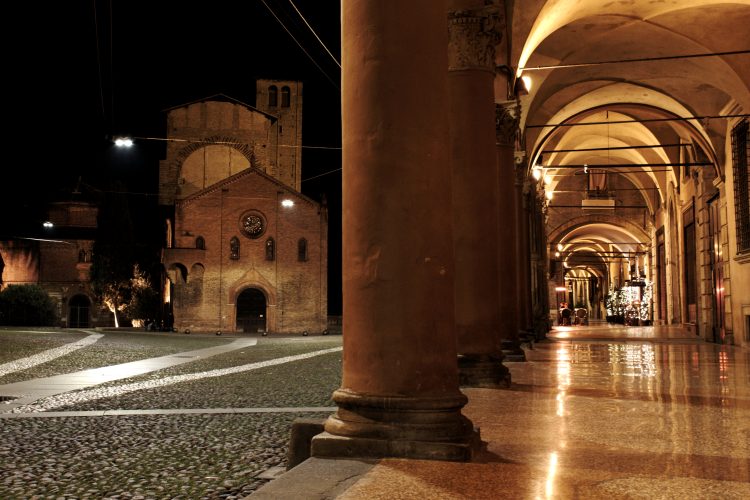
The dinner takes place in the historic center of Bologna, in an area of major historical and architectural value, next to the Santo Stefano church complex, also known as the Seven Churches complex.
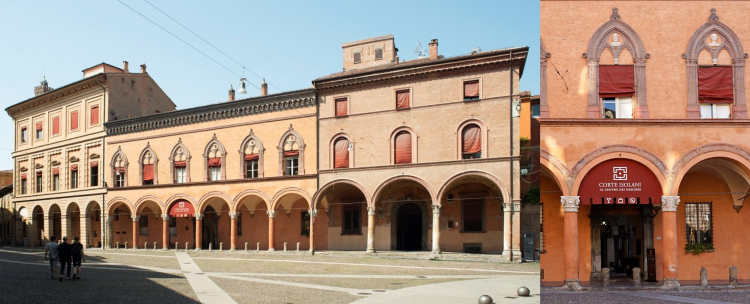
Facing the Santo Stefano church toward the porticoes, on the left you see a palace built for a family of Cypriot origin, from which the name Isolani derives. From the 1300s, the Isolani family became one of the most influential in the city. Under the porticoes is the entrance to Corte Isolani, a covered gallery similar to a Parisian passage, now used for exhibitions, shops, and restaurants.
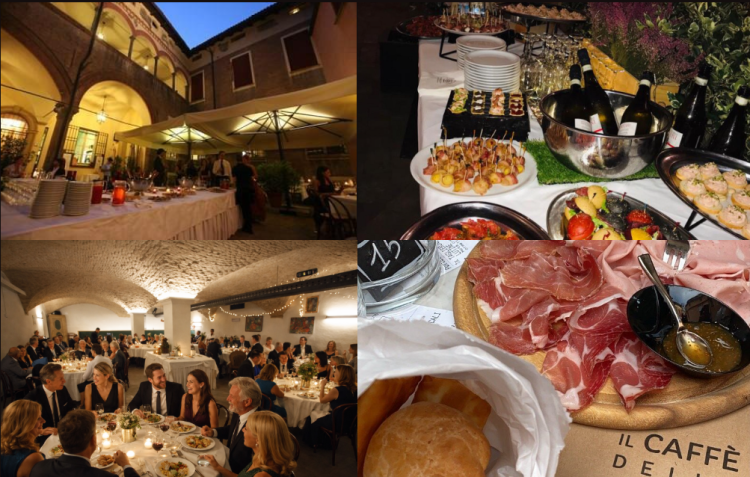
Inside Corte Isolani is Il Caffè della Corte, the venue for the social dinner. The space is private and intimate. It was chosen to encourage conversation and informal exchange among seminar participants.
Menu
8:00 pm
Welcome aperitif in the outdoor courtyard, partially covered with waterproof umbrellas and heated with infrared heaters. In case of bad weather, the aperitif is served indoors in the Sala del Pozzo.
Sparkling organic DOCG Pignoletto from the Bologna hills
Non alcoholic and alcoholic beverages
Still and sparkling mineral water
Mortadella crostini with chopped pistachios
Vegetarian crostini
Oven baked potato bites with pancetta
Prunes filled with Alto Adige speck and gorgonzola
Vegetable meatballs
Cheese selection: Parmigiano Reggiano, Valsamoggia cheese, Moliterno pecorino
Bread and crescentine
Guests then move to the Sala Maggiore.
Two first courses:
Dry passatelli with zucchini and provola, citrus aroma
Lasagne alla bolognese
Vegetable flan with Parmesan cream and grilled zucchini
Cold cuts selection served at the center of the table with bread and crescentine:
24 month aged Parma ham DOP
Coppa di Parma
Felino salami IGP
Fresh fruit salad with mascarpone cream
Coffee
Water
Organic DOCG white and red wines from the Bologna hills
LOCATION
Sala della Biblioteca di San Domenico Piazza San Domenico 13
By plane
Take the Marconi Express from the airport to the Central Train station
By train
From the Central Train Station there are two buses to get to P.za S.Domenico: bus 30 and shuttle A; stop Tribunale, near P.za S.Domenico.
 Italian version